Finished Go Programming? Here's What's Next (2026)
Ciphemic Academia Team · 24 Aug 2026 · 6 min read
You Finished the Go Programming Roadmap. Now What?
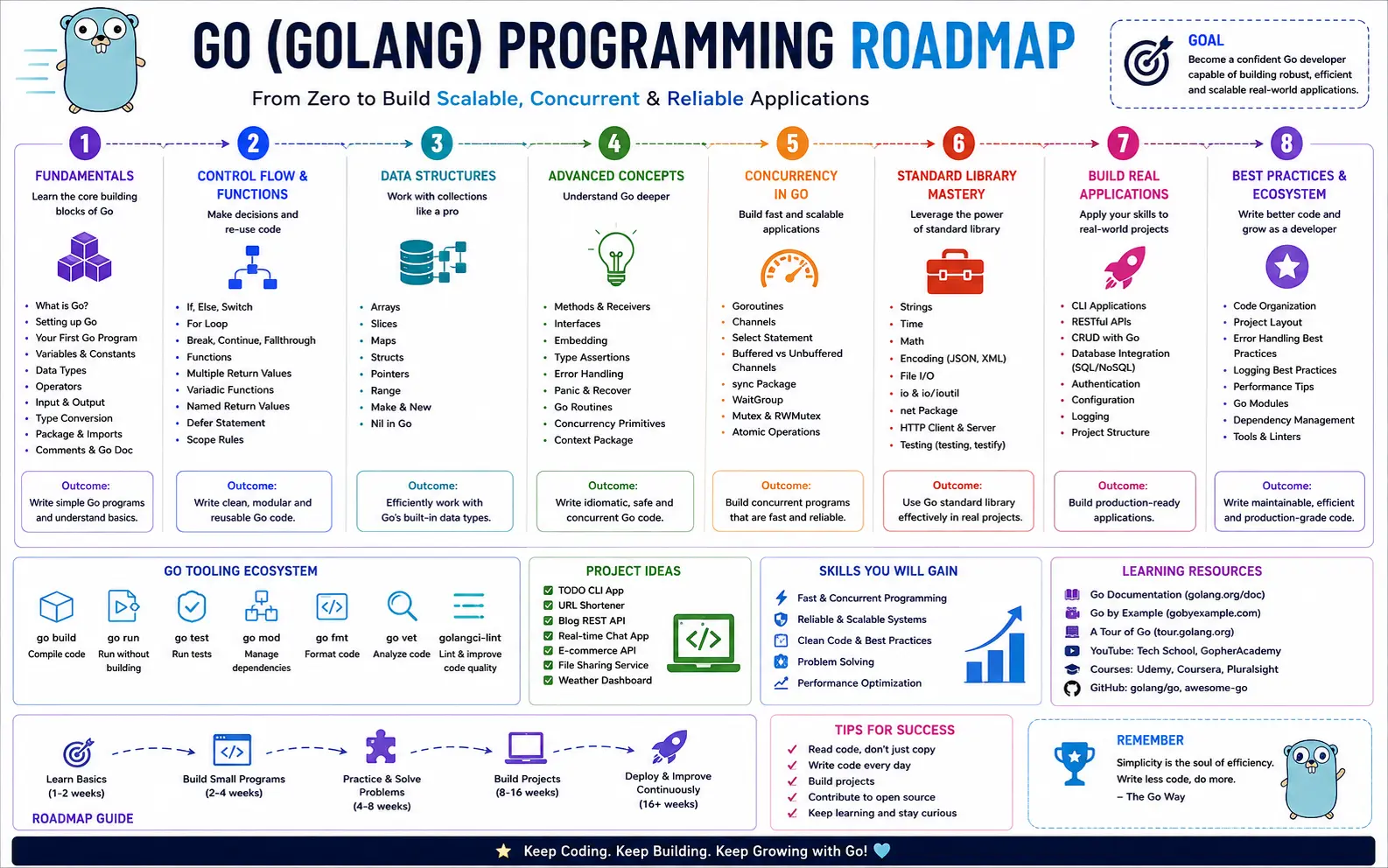
Finishing the free Go Programming roadmap this builds on — shipping real tools and services, working with concurrency and modules in production-style projects — puts you in a genuinely strong position, since Go is disproportionately the language of choice for exactly the kind of systems the next step covers: Distributed Systems Design.
Why This Is a Natural Next Step
Go's design — built-in concurrency primitives, performance, simplicity at scale — is a big part of why it's become the default language for a huge share of real-world distributed systems and infrastructure tooling (Docker, Kubernetes, and much of the modern cloud-native ecosystem are written in Go). Learning Go and then going deeper into distributed systems isn't a lateral pairing — it's following the language toward the exact problems it was designed to solve.
Distributed Systems Design
What it is: the theory and practice behind systems that span multiple machines and have to stay correct and available even when parts of them fail — consensus algorithms, distributed consistency models, and the failure-mode thinking that separates systems that look correct from systems that are actually proven to hold up. Who this suits: people who enjoyed Go's concurrency model specifically, and want to apply that comfort with concurrent, systems-level thinking to genuinely distributed, multi-machine problems. What it adds: formal treatment of consensus and distributed consistency, and the deeper architectural reasoning that goes beyond what any single language's features can teach on their own — this is a systems-thinking course, not a Go-specific one, though Go fluency makes the material considerably easier to absorb and apply. Typical next-role fit: Distributed Systems Engineer, Infrastructure Engineer, Senior Backend Engineer at companies building genuinely large-scale systems.
Why Go Specifically Sets This Up Well
A huge amount of the distributed systems and cloud-native tooling world — from container orchestration to service meshes to countless infrastructure tools — is written in Go, specifically because its concurrency model and performance characteristics suit these problems well. Real fluency in Go, from the free roadmap, means the code examples and systems you'll study in Distributed Systems Design will already feel familiar, rather than requiring you to learn both a new language and new systems concepts simultaneously.
Frequently Asked Questions
Is Distributed Systems Design taught specifically in Go? The concepts are language-agnostic and apply broadly, but Go's prevalence in the real-world distributed systems ecosystem means a meaningful share of practical examples and reference material naturally align with what a Go developer already knows. Should I learn a different language before this course, or is Go a strong enough foundation on its own? Go is a genuinely strong foundation for this specific course — its relevance to distributed systems is exactly why this pairing was chosen. There's no need to learn a second language first. Is this course only relevant if I want to work specifically on infrastructure tools like Kubernetes? No — the underlying distributed systems concepts apply to a much broader range of backend and infrastructure roles, not only tools in the Kubernetes/Docker ecosystem specifically. That ecosystem is simply a well-known, visible example of where these concepts show up. How does this differ from the Data Engineer or System Design bridges, which also lead to Distributed Systems Design? It's another path into the same distributed-systems specialization — Distributed Systems Design isn't tied to any single roadmap, since the underlying concepts are foundational across backend, data, and systems work. The System Design bridge that leads to the same course is another natural entry point, for readers coming from that angle instead of Go.
Go Deeper
Distributed Systems Design pairs naturally with the concurrency and systems fluency built in the Go Programming roadmap. Explore the course in the Data & Systems category to see the full curriculum.
Building along with this?
Join the Ciphemic Academia Discord — share what you're working on, get unstuck, and see what others are building.