
Finished System Design? Here's What's Next (2026)
Ciphemic Academia Team · 24 Aug 2026 · 6 min read
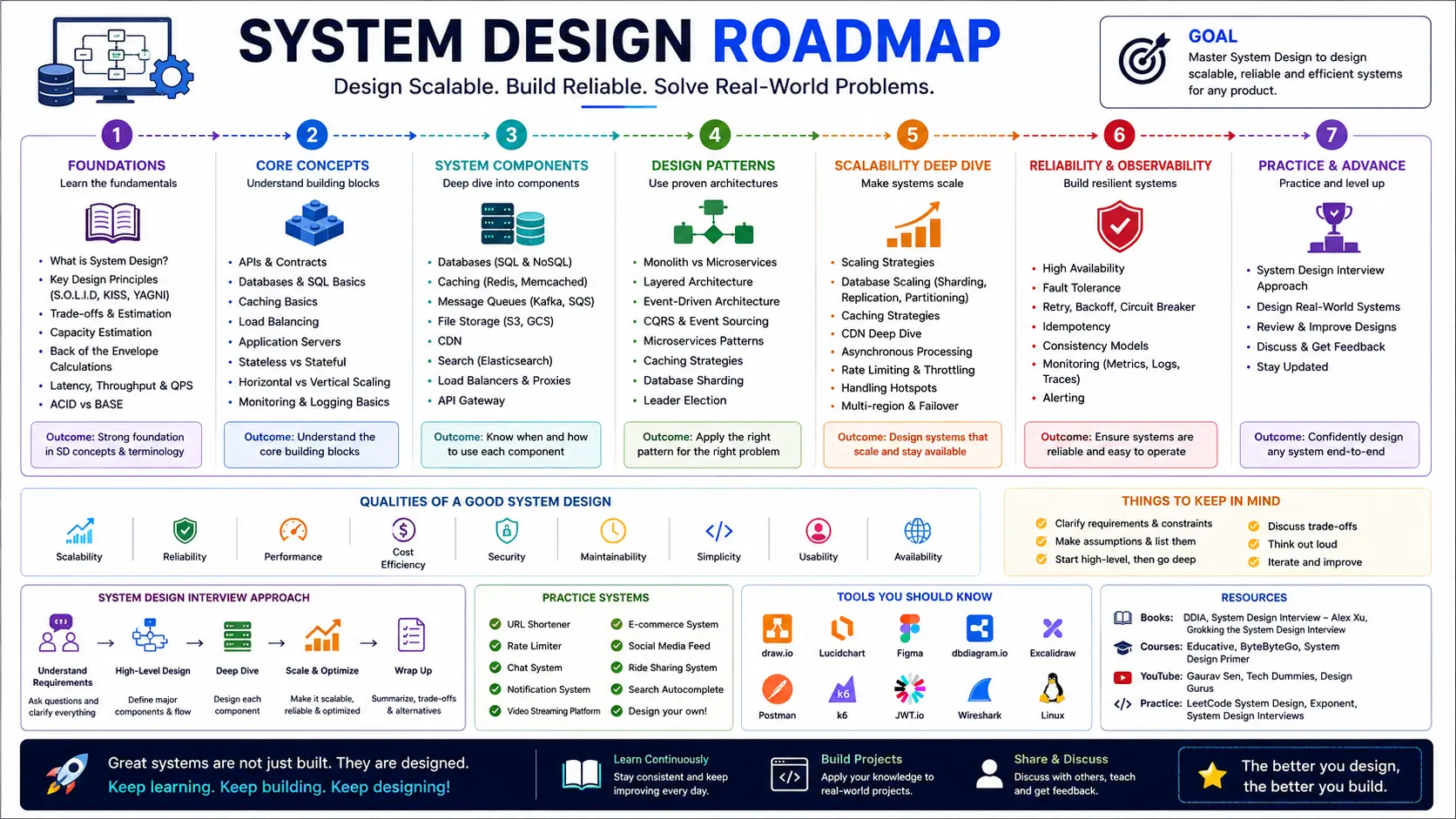
You Finished the System Design Roadmap. Now What?
Finishing the System Design roadmap — the designs that actually show up in real interviews and real production incidents — puts you well ahead of candidates who've only memorized system design diagrams without understanding the trade-offs behind them. From here, one paid course goes significantly deeper: Distributed Systems Design.
Why This Is a Direct, Natural Next Step
Unlike some of the other bridges in this series, System Design doesn't split into multiple directions — it funnels cleanly into one specialization that takes the same underlying thinking much further. It's the same funnel the Go Programming bridge that leads to the same course points to, since distributed systems thinking sits underneath both roadmaps' harder problems.
Distributed Systems Design
What it is: the deep, rigorous version of what the free System Design roadmap introduces — consensus algorithms, distributed consistency models, and the genuinely hard trade-offs behind systems that have to stay correct and available across many machines, even when parts of them fail. Who this suits: people who enjoyed the trade-off reasoning in the System Design roadmap the most — the "why would you choose this over that" thinking, not just memorizing common architecture patterns. What it adds: formal treatment of consensus (Raft, Paxos-family algorithms), distributed consistency models (strong, eventual, and everything between), and the failure-mode thinking that separates a system that looks correct from one that's actually been proven to hold up under real distributed failure conditions. Typical next-role fit: Senior Backend Engineer, Distributed Systems Engineer, Staff Engineer track roles where system design depth is a core expectation, not a nice-to-have.
What Makes This Course Worth the Jump
The free System Design roadmap is built around the designs that show up in real interviews — a strong, practical foundation. Distributed Systems Design goes further into the theory and rigor behind why those designs work, which matters increasingly as you move toward senior and staff-level roles, where interviewers expect you to reason from first principles, not just recall a known pattern.
Frequently Asked Questions
Is Distributed Systems Design overkill if I'm only targeting mid-level roles? For most mid-level roles, the free System Design roadmap alone is genuinely sufficient preparation. Distributed Systems Design becomes increasingly valuable as you target senior and staff-level positions, where deeper first-principles reasoning is expected. Does this course focus on interview prep or real production systems? Both, since the same underlying concepts apply to each — but the course goes considerably deeper into the theory and rigor than most interview-prep-focused material, because that depth is also what real production distributed systems require. How is this different from the Distributed Systems Design course mentioned in the Data Engineer bridge post? It's the same course — it's a natural next step from multiple different roadmaps, since distributed systems thinking is foundational to backend, data, and infrastructure work alike, not tied to any single specialization. See the Data Engineer bridge that leads to the same course for that version of the same argument.
Go Deeper
Distributed Systems Design builds directly on the System Design roadmap's foundation. Explore the course in the Data & Systems category to see the full curriculum.
Building along with this?
Join the Ciphemic Academia Discord — share what you're working on, get unstuck, and see what others are building.