Embedded & Edge AI, Blockchain Security, or Quantum Computing: Which Frontier Specialization Is Worth Your Time?
Ciphemic Academia Team · 2 Sept 2026 · 7 min read
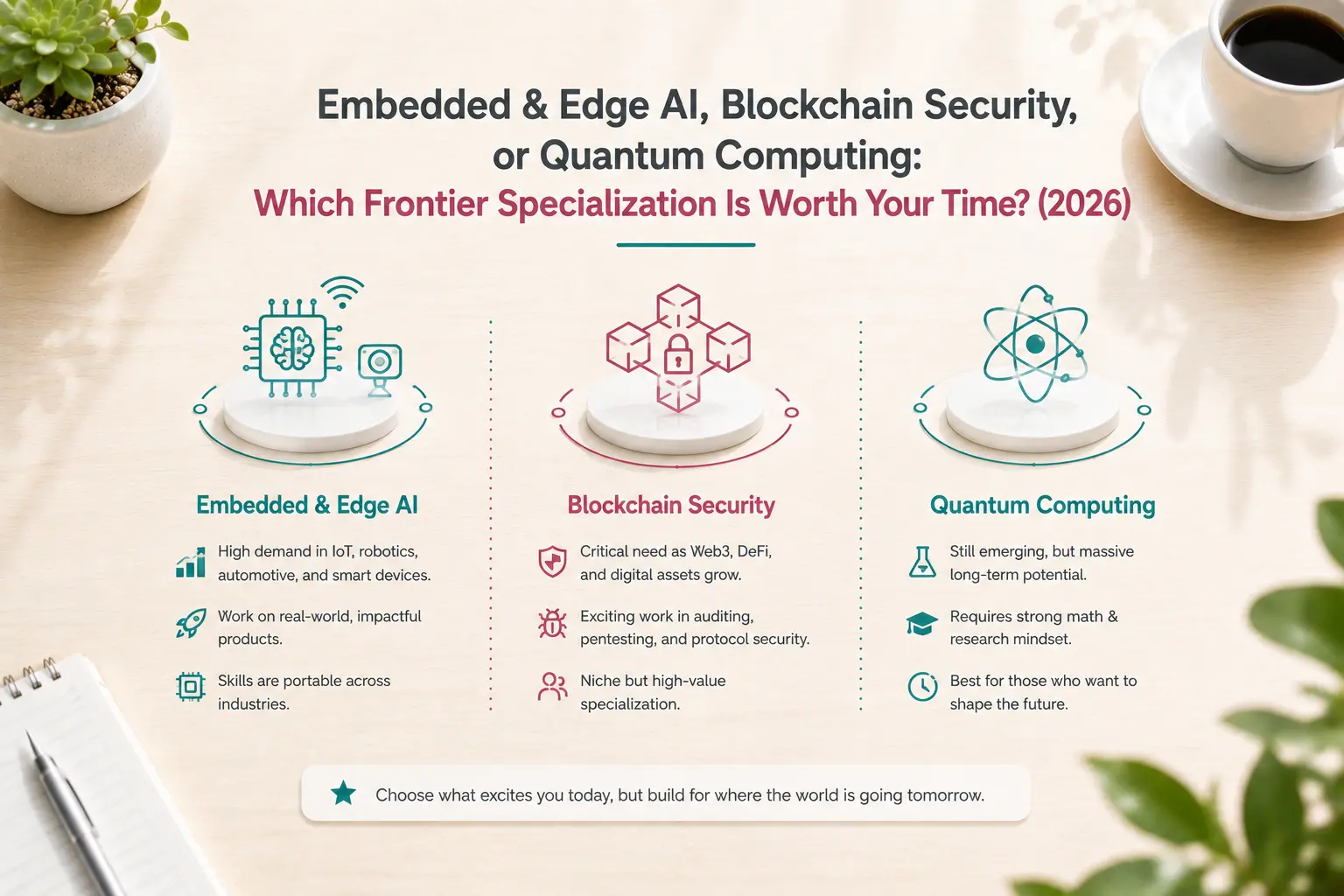
Embedded & Edge AI, Blockchain Security, or Quantum Computing: Which Frontier Specialization Is Worth Your Time?
Ciphemic Academia's Frontier category — Embedded & Edge AI, Blockchain & Smart Contract Security, and Quantum Computing Fundamentals — is different from every other paid course category on the platform. These three don't build on a single, obvious free roadmap the way Cloud Engineer leads into Multi-Cloud Architecture, or DevSecOps leads into Offensive Security. They're genuinely frontier fields: smaller job markets, faster-changing landscapes, and real questions about timing and risk that the more established categories don't require you to think through as carefully.
This guide is honest about that difference — what each field actually is, who it genuinely suits, and the real trade-offs of investing in an earlier-stage specialization versus a more established one.
Why "Frontier" Means Something Different Here
Every other paid category bridges cleanly from a free roadmap because those fields are mature enough to have an obvious, well-worn learning progression. The three Frontier fields are newer or more specialized in ways that make the path less obvious:
- Embedded & Edge AI — running AI models on resource-constrained devices (sensors, edge hardware) rather than in the cloud, a genuinely different engineering discipline from typical AI/backend work
- Blockchain & Smart Contract Security — securing blockchain-based applications and smart contracts, a niche but real security specialization tied to a specific, still-evolving technology
- Quantum Computing Fundamentals — foundational quantum computing concepts, relevant to an even earlier-stage field with a genuinely small current job market outside of research and a handful of specialized companies
Embedded & Edge AI
What it actually is: deploying and running AI models directly on constrained hardware — sensors, IoT devices, edge computing units — rather than relying on cloud infrastructure, which introduces real engineering constraints around power, memory, and processing limits that cloud-based AI work doesn't have to consider.
Who this suits: people with some AI Fundamentals background and a genuine interest in hardware constraints and embedded systems — this is a real hybrid discipline, not purely software.
Realistic market context: genuinely growing, driven by increasing demand for on-device AI (privacy, latency, and connectivity constraints all push toward edge processing), but it's a more specialized job market than mainstream cloud-based AI roles, with fewer, more specific companies hiring for it.
Best entry point: solid AI Fundamentals path Embedded & Edge AI builds on first, since the AI/model side of this specialization assumes that foundation, with the embedded/hardware constraints layered on top.
Blockchain & Smart Contract Security
What it actually is: securing blockchain applications and smart contracts specifically — a distinct security specialization, since smart contract vulnerabilities and attack patterns differ meaningfully from traditional application security vulnerabilities.
Who this suits: people with a genuine security background (the DevSecOps or Application Security path is a natural lead-in) and specific interest in blockchain technology — this isn't a good first security specialization on its own.
Realistic market context: a real, if niche, market tied directly to blockchain/crypto industry activity, which means demand has historically been more volatile than more established security specializations. Genuine expertise here is valuable, but it's a more concentrated, less universally transferable market than mainstream application or cloud security.
Best entry point: the security background Blockchain Security builds on first (the free Cryptography, Auth & Identity, and Application Security path), then this specialization layers blockchain-specific knowledge on top of already-solid security fundamentals.
Quantum Computing Fundamentals
What it actually is: foundational concepts in quantum computing — qubits, quantum algorithms, and the theoretical basis for how quantum computers differ from classical ones.
Who this suits: people with genuine curiosity about the field and often a stronger mathematical/physics background than the typical software engineering path requires — this is the most academically-leaning of the three Frontier specializations.
Realistic market context: this is the most genuinely early-stage of the three. Real quantum computing jobs currently exist mostly in research institutions and a small number of specialized companies, not in the broad software job market the other roadmaps and courses on this platform lead toward. This is worth being direct about: it's a fascinating field, but not currently a reliable path to a typical software engineering job in the way the rest of the catalog is.
Best entry point: genuine curiosity and some mathematical comfort — this course is better suited to exploration and long-term positioning than immediate career pivoting for most learners.
Side-by-Side: Being Honest About Where Each One Stands
| Embedded & Edge AI | Blockchain & Smart Contract Security | Quantum Computing Fundamentals | |
|---|---|---|---|
| Field maturity | Growing, genuinely practical now | Established niche, tied to a volatile industry | Very early-stage |
| Job market breadth | Moderate, specialized | Narrow, concentrated | Very narrow currently |
| Best prerequisite | AI Fundamentals | Security background (DevSecOps/AppSec) | Strong math/physics interest |
| Realistic near-term career impact | Real and growing | Real but market-dependent | Mostly exploratory for most learners |
How to Think About Investing in a Frontier Specialization
The honest framework here is different from the rest of the catalog: these aren't "which fits my interest" decisions in the same low-risk way the mainstream categories are, because the job markets are genuinely smaller and, in blockchain's case, more volatile. A reasonable approach:
- If you want a frontier specialization with the most immediate practical job relevance, Embedded & Edge AI is the strongest current bet of the three
- If you already have real security skill and specific interest in blockchain technology, Blockchain & Smart Contract Security is a legitimate niche specialization, with the caveat that the market moves with the broader blockchain industry's cycles
- If you're genuinely curious about quantum computing and comfortable treating it as long-term positioning or intellectual interest rather than a near-term career pivot, Quantum Computing Fundamentals is worth exploring on those terms specifically
Frequently Asked Questions
Should a beginner start with a Frontier course before building foundational skills?
No — all three Frontier specializations assume real foundational skill from elsewhere on the platform (AI Fundamentals for Edge AI, security fundamentals for Blockchain Security, strong math comfort for Quantum Computing). These are advanced, specialized additions, not starting points.
Is Quantum Computing Fundamentals a waste of time if the job market is this small right now?
Not necessarily a waste, but it's worth pursuing with realistic expectations — as genuine intellectual interest or long-term positioning in a field that may mature significantly over a career timespan, rather than an expectation of an immediate, typical job market payoff the way the rest of the catalog offers.
Is Blockchain & Smart Contract Security a stable long-term specialization?
It's a real, ongoing specialization, but demand has historically correlated with broader blockchain/crypto industry activity, which has been more cyclical than mainstream software or cloud security demand. It's a legitimate niche for someone genuinely interested, with that market volatility understood going in.
Which Frontier specialization has the best near-term return for most learners?
Embedded & Edge AI currently has the most practical, immediate relevance of the three, driven by real, growing demand for on-device AI processing. It's the most reasonable Frontier pick for someone who wants a specialization with near-term career upside rather than primarily long-term or exploratory value.
Explore the Frontier, With Realistic Expectations
Explore the paid courses in the Frontier category — Embedded & Edge AI, Blockchain & Smart Contract Security, and Quantum Computing Fundamentals — and choose based on genuine interest and realistic market expectations, not just because "frontier" sounds impressive. Build the right foundation first, and go in with eyes open about where each field actually stands today.
Building along with this?
Join the Ciphemic Academia Discord — share what you're working on, get unstuck, and see what others are building.