Finished the Backend Engineer Roadmap? Here's What's Next (2026)
Ciphemic Academia Team · 24 Aug 2026 · 6 min read
You Finished the Backend Engineer Roadmap. Now What?
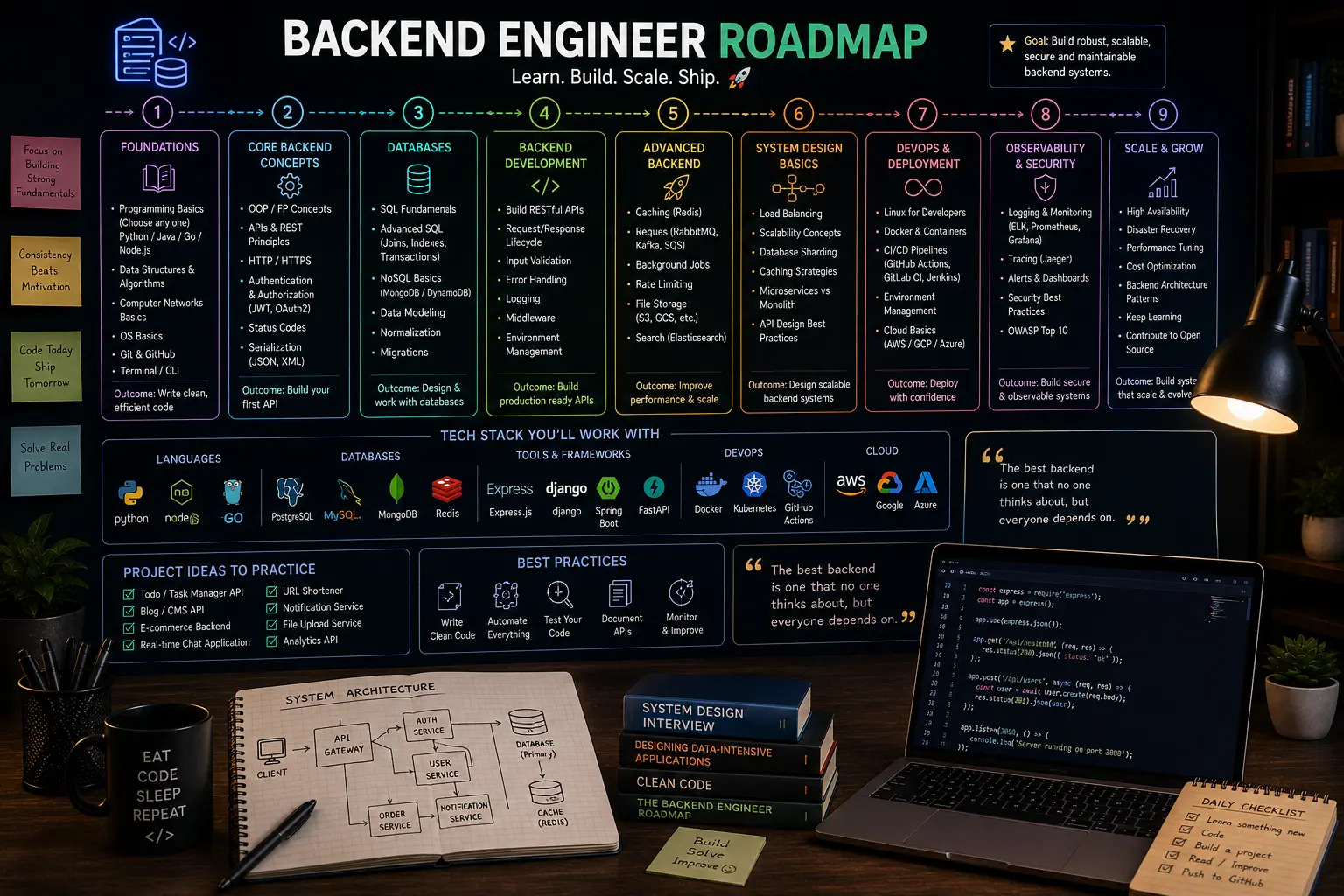
Finishing the free Backend Engineer roadmap this builds on — proper auth, real system design elements, a tested API — puts you ahead of most self-taught developers who stopped at their fifth CRUD app. From here, two Product & Career-track paid courses take backend skill in genuinely different directions: building a full product, or teaching and communicating what you know. (The same two courses also follow the React & Frontend roadmap — see the same two Product & Career courses from a frontend angle if that's your background instead.)
Two Different Directions From Here
- 0-to-1 SaaS Engineering — taking a product from nothing to a real, shippable SaaS application, using backend skills as the foundation for a much broader build
- DevRel & Technical Content — a career path built around communicating technical knowledge, not just writing it — documentation, talks, tutorials, and community
These aren't competing specializations so much as genuinely different career shapes — one goes deeper into building, the other pivots toward communication built on real technical credibility.
0-to-1 SaaS Engineering
What it is: taking a product idea from zero to a real, functioning SaaS application — architecture, billing, multi-tenancy, and all the unglamorous product infrastructure that a single backend API doesn't have to deal with.
Who this suits: people who enjoyed building the complete backend system in their roadmap project and want to go further — toward owning a full product, not just a service.
What it adds: multi-tenant architecture, subscription billing integration, product-level infrastructure decisions, and the broader scope of building something a real business runs on.
Typical next-role fit: Founding Engineer, Full-Stack SaaS Engineer, technical co-founder track.
DevRel & Technical Content
What it is: a career path centered on communicating technical knowledge — writing documentation and tutorials, speaking at events, building developer communities — that requires genuine backend fluency as credibility, even though the daily work looks different from pure engineering.
Who this suits: people who enjoyed explaining their backend project to others as much as building it, and who get real satisfaction from teaching or writing.
What it adds: technical writing and documentation skill, public speaking and content creation, and the specific skill of translating deep technical work into something a wider audience can actually use.
Typical next-role fit: Developer Advocate, Technical Writer, Developer Relations Engineer.
Side-by-Side
| 0-to-1 SaaS Engineering | DevRel & Technical Content | |
|---|---|---|
| Focus | Building a complete product | Communicating technical knowledge |
| Best fits | Builders who want ownership | Communicators with real technical depth |
| Daily work | Mostly coding and architecture | Mix of writing, speaking, and some coding |
| Career shape | Deeper into engineering/founding | Pivot toward communication-heavy roles |
How to Decide
- Enjoyed the building itself and want to own more of the product → 0-to-1 SaaS Engineering
- Enjoyed explaining what you built, and writing about it, as much as building it → DevRel & Technical Content
Frequently Asked Questions
Do I need public speaking experience for the DevRel course?
No — it's a skill the course builds, not a prerequisite. What matters more going in is genuine technical credibility from your backend work and real interest in communication.
Is 0-to-1 SaaS Engineering only useful if I want to start my own company?
No — the skills transfer directly to Founding Engineer roles at early-stage startups, which are in real demand and don't require you to be a founder yourself.
Can someone move from DevRel back into pure engineering later?
Yes — DevRel roles keep real technical skills active, since credibility in that field depends on staying genuinely hands-on, which makes moving back into engineering-focused roles later a realistic path.
See how Ciphemic compares to Boot.dev and other platforms if you're also weighing where to build the Backend Engineer foundation itself.
Choose Your Path
Both paths build directly on the Backend Engineer roadmap's foundation. Explore the paid courses in the Product & Career category to find the one that fits the kind of career you actually want.
Building along with this?
Join the Ciphemic Academia Discord — share what you're working on, get unstuck, and see what others are building.